
Dentures in Bilekahalli, Bengaluru
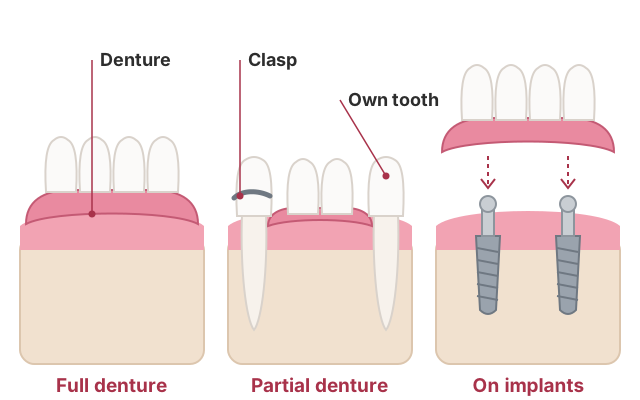
A denture is a removable replacement for missing teeth. A full denture replaces all the teeth in the upper or lower jaw; a partial denture fills the gaps when some of your own teeth remain. A denture can also be held firmly in place by dental implants.
- Visits
- 4–6
- Ready in
- 3–5 weeks
- Anaesthesia
- Usually none
- Getting used to it
- A few weeks
When you might need them
- You have lost all the teeth in one or both jaws.
- You have several missing teeth, and a bridge or implants aren't suitable for you.
- Your current denture is loose, broken, or no longer fits because your gums have changed.
- Missing teeth make eating or speaking difficult.
Types of denture
| Full denture | Partial denture | Implant-supported denture | |
|---|---|---|---|
| Replaces | All the teeth in one jaw | Some teeth, when others remain | All or most teeth in one jaw |
| Held in place by | Suction and the shape of the gums | Clasps on your own teeth | Clips or press-studs on 2–4 implants |
| Steadiness when eating | A lower denture can move | Good | Firm |
| You take it out | Yes | Yes | Yes, to clean it |
| Visits | 4–6 | 4–6 | 5–8, plus healing time for the implants |
Partial dentures can be made of acrylic (plastic), on a thin cast-metal frame, or from a flexible material. A metal frame is thinner and stronger; a flexible denture has no metal clasps. We'll explain which suits your mouth.
Fixed teeth on implants, which you don't take out at all, are another option when there is enough bone. See our dental implants page.
What happens, step by step
- Examination. We check your gums, the bone and any remaining teeth, and take X-rays if needed. Teeth that need treatment or removal are dealt with first.
- Treatment plan and written estimate. You receive the type of denture, the number of visits and the total fee in writing before treatment begins.
- Impressions. We take moulds of your mouth: a first one, then a more detailed one with a tray made to fit you.
- Your bite and the teeth. We record how your jaws meet and choose the size, shape and shade of the teeth with you.
- Try-in. You try the denture with the teeth set in wax, so the fit, bite and appearance can be checked and changed before it is finished.
- Fitting and reviews. The finished denture is fitted and adjusted. You come back after 1–2 days, and again as needed, so we can ease any sore spots.
For an implant-supported denture, the implants are placed first and allowed to heal for about 3–6 months before the denture is attached to them.
Possible risks
- Sore spots where the denture rubs, especially in the first weeks. Small adjustments ease them.
- Looseness, especially of a lower full denture. Implants can help.
- Speaking and eating feel different at first; most people adapt within a few weeks.
- Extra saliva or gagging in the first days, which usually settles.
- Fungal infection under the denture if it is worn day and night or not cleaned well.
- Gum and bone shrinking over time, which loosens the denture; it then needs relining or replacing.
- For partial dentures: plaque collecting around the clasps can cause decay and gum disease on the teeth that hold them, so clean them carefully.
- For implant-supported dentures: the risks of implant surgery also apply; see the dental implants page.
We go through the risks that apply to you before you decide.
After your treatment
- Start with soft food cut into small pieces, and chew on both sides at the same time.
- Take your dentures out at night to rest your gums, unless we advise otherwise.
- Clean them every day with a soft brush and mild soap or a denture cleaner. Toothpaste can scratch them.
- When they're out, keep them in water or a soaking solution so they don't dry out and change shape. Never use hot water.
- Clean your gums, tongue and any remaining teeth twice a day.
- Don't try to adjust or repair a denture yourself.
- Come for a check-up every 6–12 months, even if you have no natural teeth, so we can check the fit and your gums.
Call us if a sore spot doesn't heal within a few days, the denture becomes loose, or it cracks or a tooth comes off.
Fees
The fee depends on the type of denture, the materials, the number of teeth replaced and, for implant-supported dentures, the number of implants. You receive a written estimate after the examination, before treatment starts. Call or WhatsApp us if you'd like an idea of the cost.
Questions patients ask
How long does it take to get used to dentures?
Most people are comfortable eating and speaking within a few weeks. A lower full denture usually takes the longest, because the tongue and cheeks move it more.
Can I sleep with my dentures in?
It's best to take them out at night, to rest your gums and lower the risk of infection, unless we advise otherwise.
Will my dentures look natural?
The size, shape and shade of the teeth are chosen with you and checked at the try-in, while they are still set in wax and can be changed.
How long do dentures last?
Many last several years. The gums and bone slowly change shape after teeth are lost, so most dentures need relining or replacing every few years to keep fitting well.
Should I use denture adhesive?
A small amount can help a well-fitting denture feel more secure. If you need a lot of it, the denture probably needs relining; come and see us.
My lower denture keeps moving. What can help?
A reline can improve the fit. If that isn't enough, two implants with clips can hold a lower denture firmly in place.
Can I have teeth on the same day my teeth are removed?
Sometimes. An immediate denture is made before the teeth are removed and fitted on the same day. As the gums heal and shrink, it needs relining or replacing after a few months.
Location
Dantya Dental, 18, 1st Floor, 6th Main St, Thayappa Garden, Ramanashree Enclave, Bilekahalli, Bengaluru, Karnataka 560076
Near Racket Club of Bengaluru, close to IIM Bangalore. Easy to reach from BTM Layout, JP Nagar, Arekere and Bannerghatta Road.
Monday to Saturday, 10am–8pm. Sundays by appointment.
Related treatments
Reviewed by Dr. Yashashwini N Simha, MDS (Prosthodontics and Implantology), FICOI (NDC Reg. No. 38871-A) on 22 October 2026.
This page gives general information. Your dentist will advise what suits you after examining you.