
Gum Treatment in Bilekahalli, Bengaluru
Gum treatment (periodontal treatment) looks after the gums and the bone that hold your teeth in place. It ranges from a deep clean below the gum line to surgery that rebuilds lost bone or covers receding roots.
- Deep cleaning
- Usually 2 visits
- Anaesthesia
- Local
- Re-check
- 6–8 weeks later
- Afterwards
- Check-ups every 3–6 months

When you might need it
- Gums that bleed when you brush or floss.
- Red, swollen or tender gums.
- Bad breath or a bad taste that keeps coming back.
- Gums that are receding, making the teeth look longer.
- Teeth that feel loose, have moved, or have new gaps between them.
- Pus around a tooth, or a gum abscess.
Gum disease is often painless until it is advanced, so a check is worth it even without pain, especially if you smoke or chew tobacco, have diabetes, or are pregnant.
Gum disease in two stages
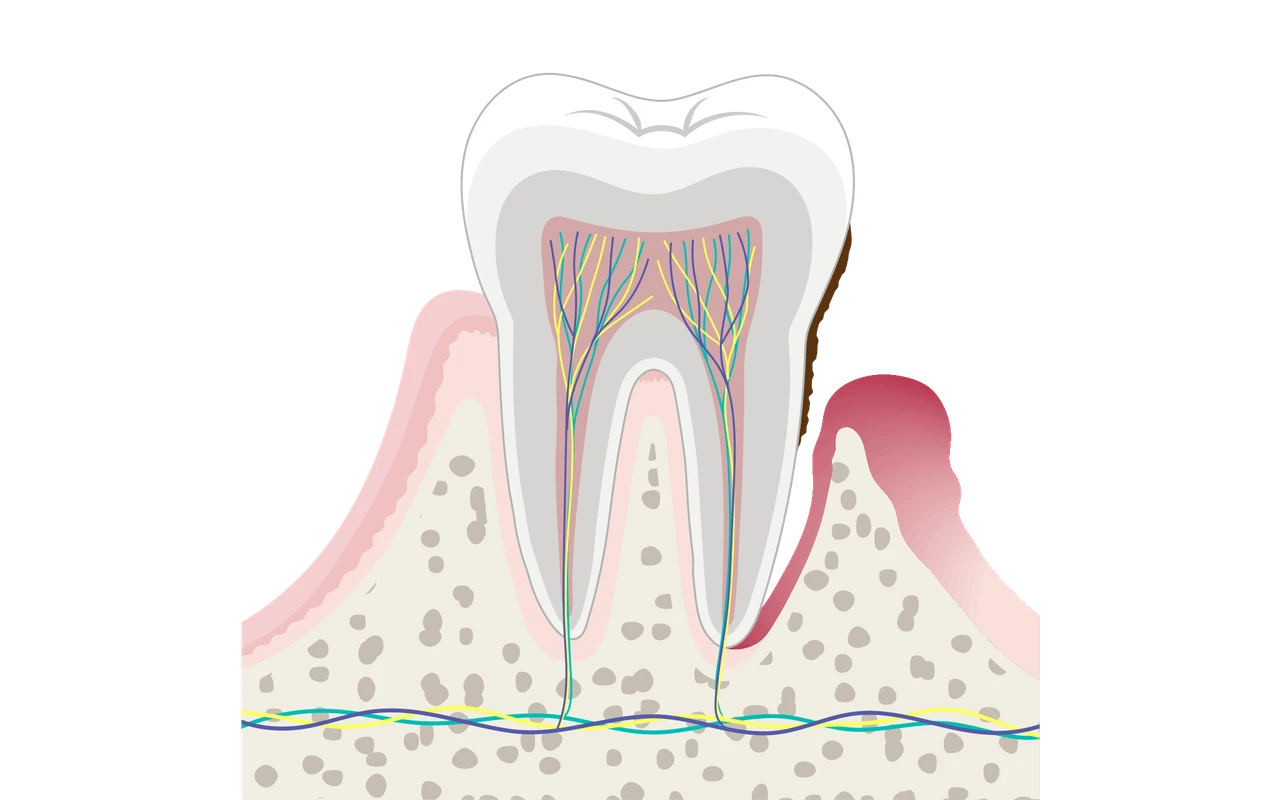
- Gingivitis: plaque along the gum line inflames the gums, which turn red and bleed easily. The bone is not affected, and it can be reversed.
- Periodontitis: if gingivitis isn't treated, tartar builds up below the gum line, the gum comes away from the tooth to form a pocket, and the bone holding the tooth shrinks. Teeth can loosen and, in time, be lost.
Healthy gums fit snugly, with a shallow space of about 1–3 mm between gum and tooth. A thin probe measures this space at each tooth, and X-rays show how much bone is left.
Treatments we offer
| Treatment | What it is |
|---|---|
| Deep cleaning (scaling and root planing) | Cleaning tartar and bacteria from the root surfaces below the gum line, under local anaesthetic, usually over 2 visits |
| Flap surgery | The gum is gently lifted to clean deep pockets that cleaning alone can't reach, then stitched back closely around the teeth |
| Bone grafts and regeneration | Rebuilding some of the bone lost to gum disease, using a bone graft material and sometimes a thin membrane |
| Gum grafts for receding gums | A thin piece of gum, usually from the roof of the mouth, is placed to cover exposed roots |
| Crown lengthening | Reshaping gum, and sometimes bone, to show more of a tooth: before a crown, or for a gummy smile |
| Periodontal microsurgery | Gum surgery done with magnification and fine instruments, so cuts and stitches can be smaller |
| Gum depigmentation | Removing dark pigment from the gums for appearance |
| Laser gum treatment | Some gum procedures, such as reshaping the gums or removing dark pigment, done with a dental laser instead of a blade: usually less bleeding and less discomfort afterwards |
We explain which treatment your gums need, and why, before anything is done.
What happens, step by step
- Gum examination. We measure the space around each tooth with a probe, check for bleeding, receding gums and loose teeth, and take X-rays to see the bone.
- Treatment plan and written estimate. We explain the stage of your gum disease, the treatment it needs and the number of visits, with the fee in writing before treatment starts.
- Deep cleaning. Most gum disease is treated first with deep cleaning, a section of the mouth at a time, under local anaesthetic. We also show you the best way to clean your teeth and gums at home.
- Re-check. 6–8 weeks later we measure the gums again. Often deep cleaning is enough; deep pockets that remain may need gum surgery.
- Surgery, if needed. Flap surgery, regeneration, grafts or crown lengthening, under local anaesthetic. Stitches are usually removed after 1–2 weeks.
- Check-ups. Regular check-ups and cleaning, usually every 3–6 months, keep the gums stable.
Possible risks
- Sensitivity to cold for a few days or weeks after deep cleaning, as the roots are cleaned.
- Gums shrinking a little as the swelling goes down, which can make the teeth look longer or show small gaps.
- Soreness, swelling or bruising for a few days after gum surgery.
- Bleeding for the first day after surgery; it usually stops with gentle pressure on a gauze pad.
- Infection, which is uncommon and is treated if it happens.
- A graft not taking fully, so the root is only partly covered.
- Gum disease coming back without good cleaning at home and regular check-ups.
We go through the risks that apply to you before you decide.
Looking after your gums
- Brush twice a day with a soft brush and fluoride toothpaste, angling the bristles towards the gum line.
- Clean between your teeth every day with interdental brushes or floss, as we show you.
- After gum surgery, eat soft food, chew on the other side, and don't brush the area until we say so. Use the mouthwash we prescribe, if any.
- Don't smoke or chew tobacco, especially while the gums heal.
- Keep your check-ups, even when your gums feel fine.
Call us if bleeding after surgery doesn't stop with pressure, if swelling or pain gets worse after the third day, or if you have a fever.
Fees
The fee depends on how much treatment your gums need, and whether surgery or grafts are needed. You receive a written estimate after the examination, before treatment starts. Call or WhatsApp us if you'd like an idea of the cost.
Questions patients ask
Why do my gums bleed when I brush?
Bleeding is usually the first sign of gum inflammation (gingivitis), caused by plaque along the gum line. Don't stop brushing: keep brushing gently and come for a check-up. Caught early, gingivitis usually settles with cleaning and better brushing.
Can gum disease be cured?
Early gum disease (gingivitis) can be reversed. Advanced gum disease (periodontitis) can be brought under control and kept stable with treatment and regular check-ups, but bone that has been lost does not grow back by itself. Some lost bone can be rebuilt with regenerative surgery.
Does deep cleaning hurt?
It is done under local anaesthetic, so you shouldn't feel pain during it. The gums may be sore and the teeth sensitive to cold for a few days afterwards.
Will cleaning loosen my teeth or make gaps?
No. Cleaning removes tartar and lets swollen gums heal. As the swelling goes down, spaces that were filled by tartar or swollen gum can show. Teeth that were already loose because of bone loss may feel firmer once the gums have healed.
Can receding gums grow back?
Not by themselves. A gum graft can cover some or all of an exposed root, depending on how much gum and bone is left. We check first what is likely to be possible for your teeth.
Does gum disease affect my general health?
Gum disease and diabetes affect each other: gum disease makes blood sugar harder to control, and poorly controlled diabetes makes gum disease worse. Tell us about any health conditions and the medicines you take.
I smoke or chew tobacco. Does it matter?
Yes. Smoking, gutka, paan with tobacco and other tobacco products make gum disease more likely and slower to heal, and can hide the warning sign of bleeding. Stopping helps treatment work. We can tell you where to get help to quit.
My gums are dark. Is that a problem?
Usually not. Dark patches are most often natural pigment and are harmless. If you'd like lighter gums for appearance, gum depigmentation can remove the pigment, though it can slowly come back. We check that a dark patch is ordinary pigment before any treatment.
Is laser gum treatment less painful?
For some procedures, yes. When the gums are reshaped or dark pigment is removed, a laser usually means less bleeding and less discomfort afterwards than a blade. The area is numbed when needed, so you shouldn't feel pain during the procedure. A laser suits some cases, not all; we explain which option suits you and why.
How often should I come after gum treatment?
Usually every 3–6 months, depending on your gums and how well they stay healthy. Gum disease can come back, so regular check-ups and cleaning are part of the treatment.
Location
Dantya Dental, 18, 1st Floor, 6th Main St, Thayappa Garden, Ramanashree Enclave, Bilekahalli, Bengaluru, Karnataka 560076
Near Racket Club of Bengaluru, close to IIM Bangalore. Easy to reach from BTM Layout, JP Nagar, Arekere and Bannerghatta Road.
Monday to Saturday, 10am–8pm. Sundays by appointment.
Related treatments
Reviewed by Dr. Bharath, MDS (Periodontics) (NDC Reg. No. 21867) on 10 November 2026.
This page gives general information. Your dentist will advise what suits you after examining you.